Beyond Pooja Room: How a Frame Gives Tanjore Painting a Place in Modern Homes
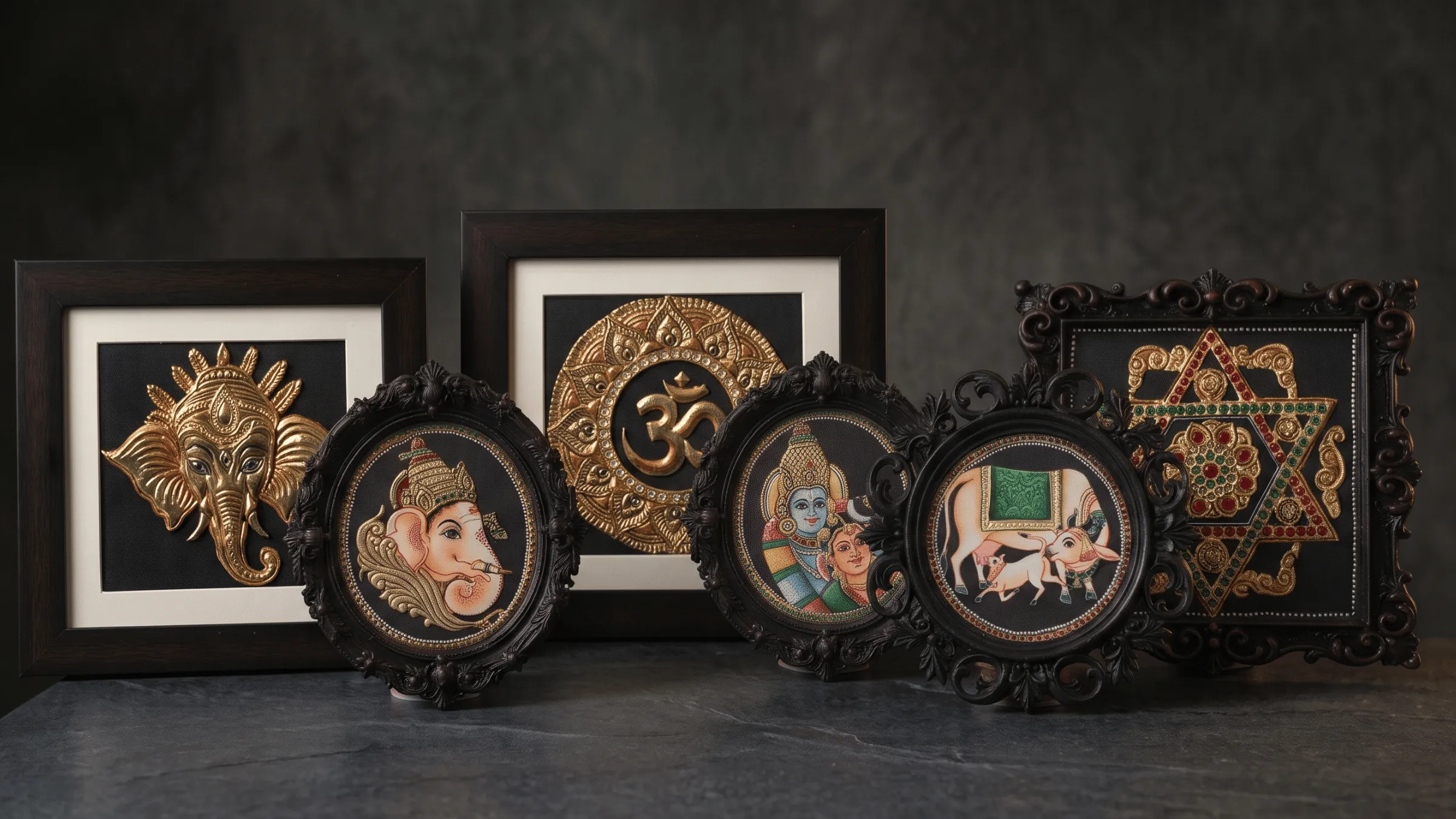
What a frame actually does to a painting
A frame is the first thing your eye meets and the last thing it leaves. It sets the size the painting appears to be and decides how much attention it gets from across a room. That’s why a frame can make or break an artwork.
Too heavy, and it swallows the painting. Too plain, and a beautiful piece looks unfinished. The wrong colour or proportion can make good work look ordinary, and the right ones make it look regal.
Framing a Tanjore painting
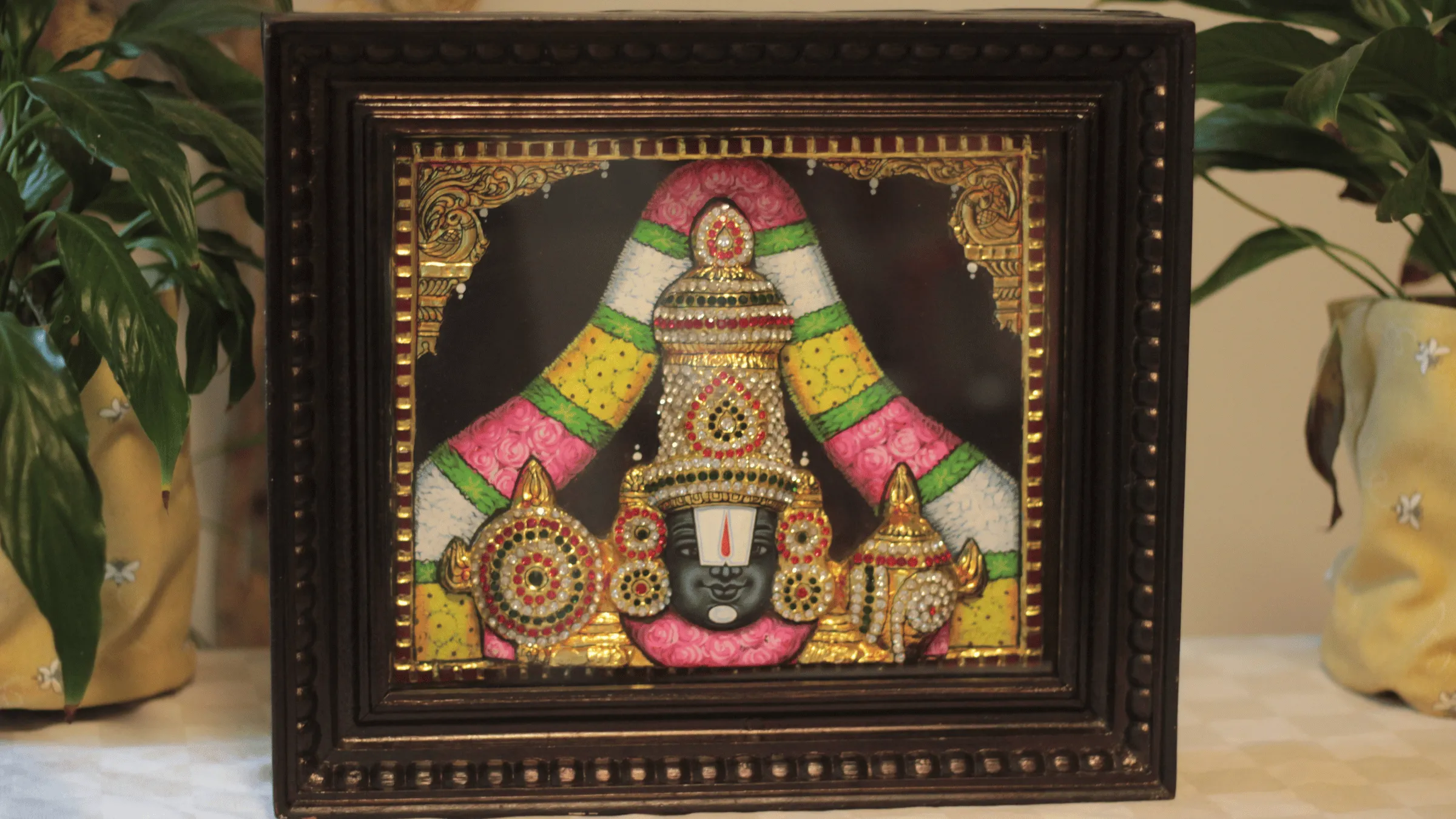
Tanjore (Thanjavur) paintings have their own framing tradition, and it’s built around teak.
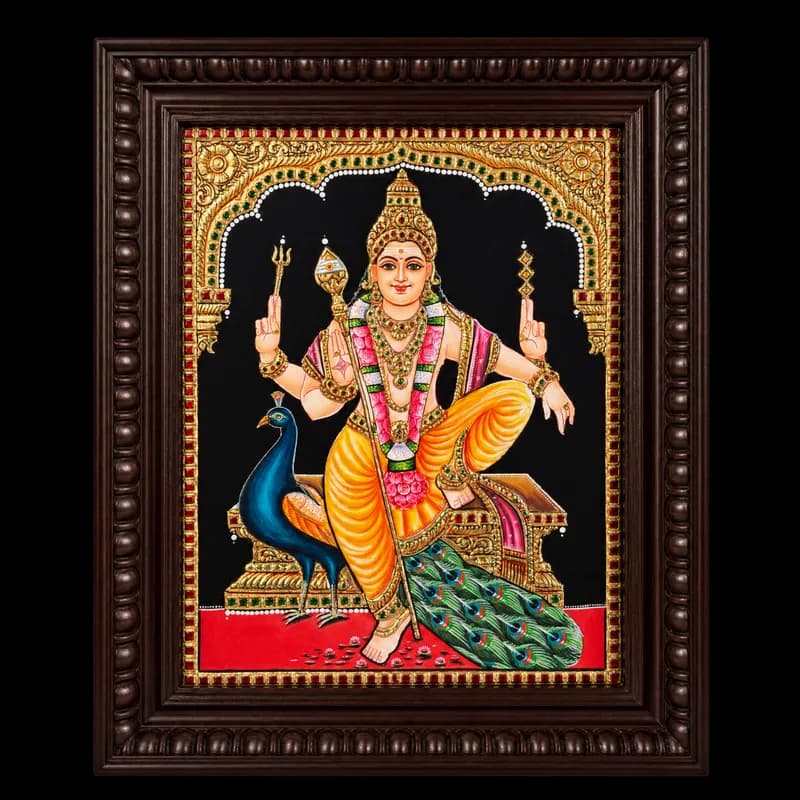
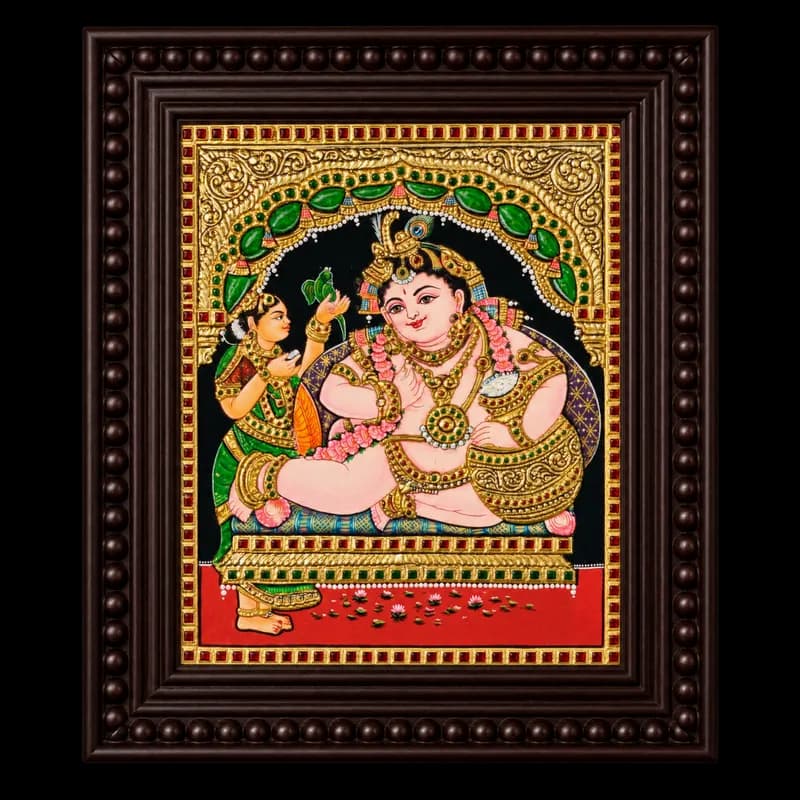
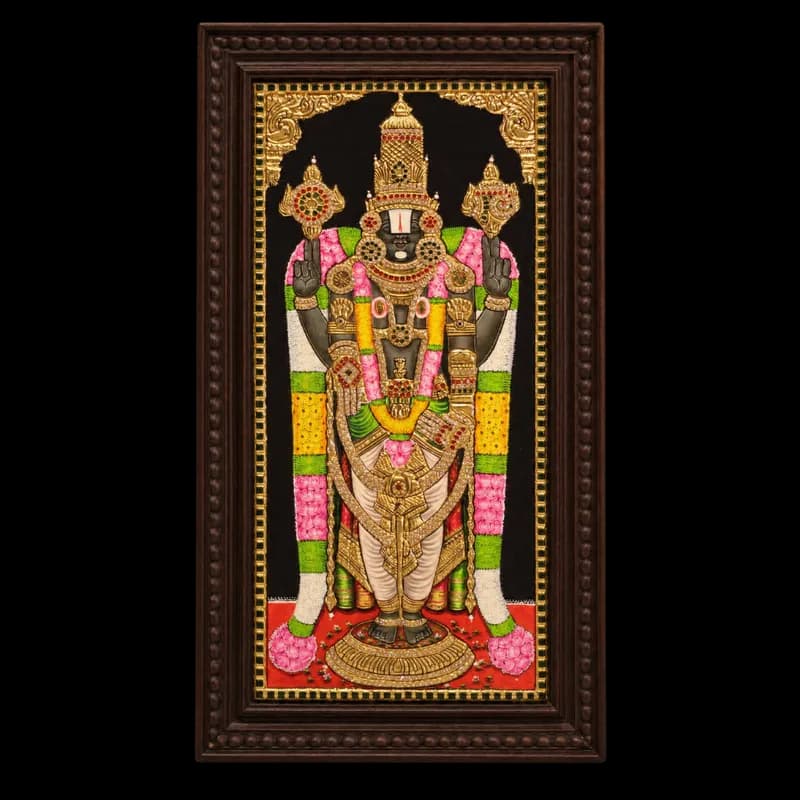
The mani frame is the most preferred choice. It’s a traditional, heavy wooden border with a carved bell-like or bead-like structure running along its inner profile, which sits right against the painting and draws the eye in. If you want a frame with more character, there’s the chettinad frame, with a sawtooth edge on the outside and carved mouldings stepping in towards the painting. Then there’s the mandapam frame, the most luxurious of them all, with carved detail that makes the painting look stunning.
With changing times, we’ve also introduced straight frames. They’re one inch wide, so they fit into a space without taking up much room.
For us, the frame has never been an afterthought. When we take on a unique custom order, we make the frame first and then paint the artwork to sit inside it. That’s how it was done traditionally, and it’s how we still work.
Teak suits a Tanjore painting beautifully. It’s also very heavy, and that turned out to matter more in Sydney than we expected.
Bringing a traditional painting into a modern home
I launched Shree Jai Arts in Sydney a year ago, and since then I’ve talked to a lot of people about traditional art. I kept hearing the same two things. They loved the art, but they worried it would be too traditional for their space.
A lot of Australian homes are modern, with clean walls and neutral colours, and people couldn’t picture a Tanjore in a carved teak frame fitting in. They wanted a traditional touch, but not an overpowering one.
Many assumed a Tanjore painting could only go in the pooja room and nowhere else.
The second worry was weight. A large teak frame is heavy, and people weren’t sure their walls could carry it. Australian homes aren’t really built to hang a 3-4 kilo painting.
I soon realised that neither worry was about the painting. It was about everything around it. So we asked what would happen if the painting stayed exactly as it is and only the frame changed.
That sent us off to research, and we settled on the idea of fusion. We explored different schools of framing and decided an ornamental frame would suit best, so the painting keeps its tradition while the frame gives it a setting a modern home can hold.
We wanted Tanjore to be seen as a beautiful art form in its own right, not only the thing that sits in the pooja room. The frame was what could make that happen.
Why acrylic?
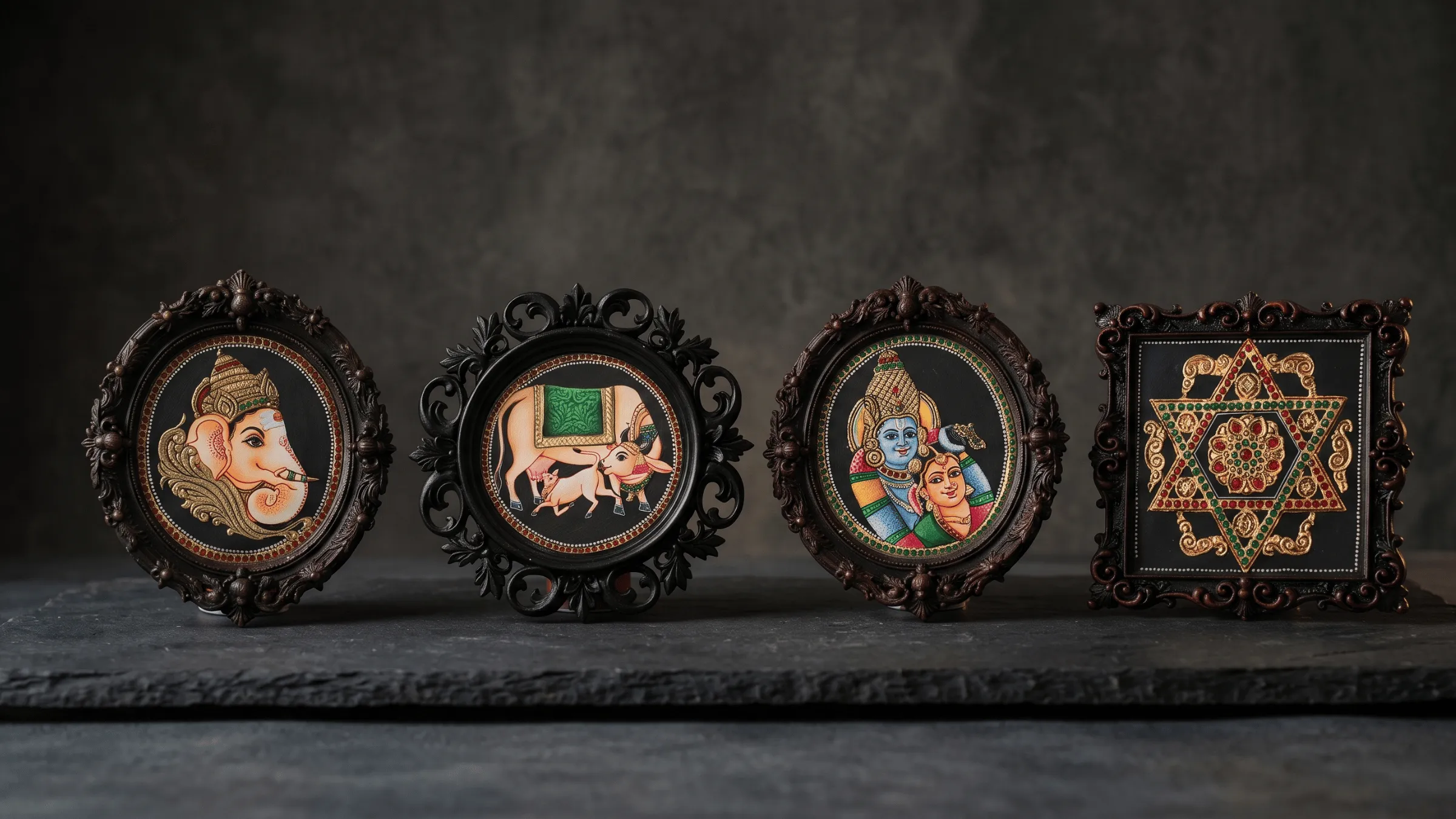
We loved the idea of ornamental frames, but making them in wood came with its own difficulties. When we carve a frame by hand from wood, a lot of the wood is cut away and wasted, and the more ornate the design, the more is lost. Our teak frames ended up costing more than the painting inside them, which is hard to justify when the painting is the part that took months.
It also didn’t solve the weight problem people kept raising. Acrylic is much lighter than teak, so the painting can go up on an ordinary wall without any worry.
We chose acrylic with a wood finish. That gives the frame the dark, carved look people expect around a Tanjore painting, so the traditional vivid colours inside still stands out, without the weight and the cost of the frame stays in proportion to the painting.
These frames are the result of a lot of experimenting. We listened to the worries people had, worked through them one by one, and this is what we came up with. We hope you like it.
You can see our one-of-a-kind framed range in the collection
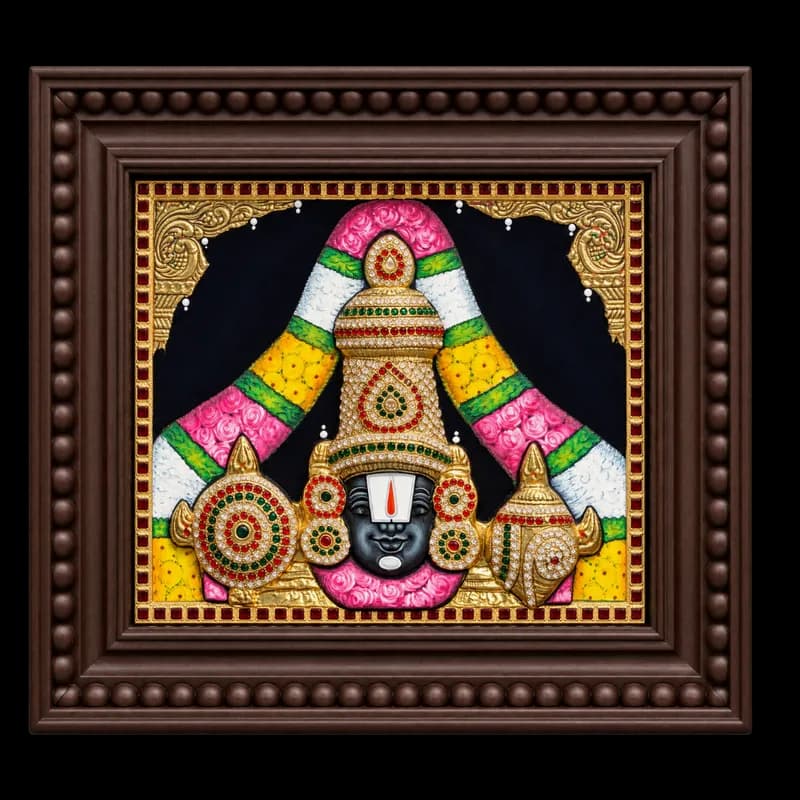
Lord Perumal Super Embossed Tanjore Painting
Tanjore Painting
A$550
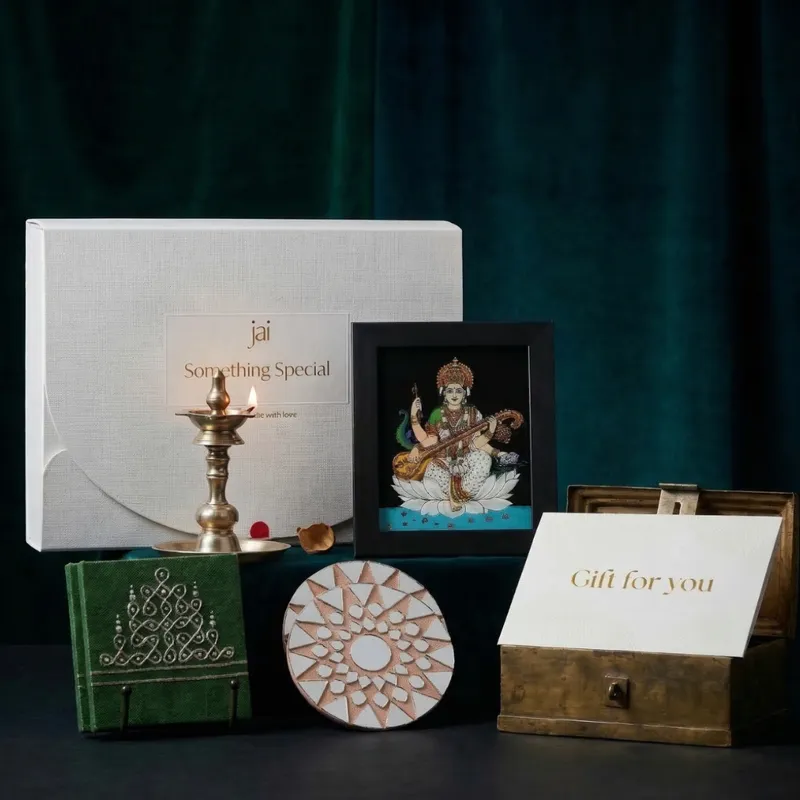
Artisan Hamper : Reverse Glass Painting Edition
Gift Hamper & Collection
A$80
Lord Murugan with Peacock Tanjore Painting
Tanjore Painting
A$490
Butter Krishna or Bala Krishna Tanjore Painting
Tanjore Painting
A$390
Lord Perumal Tanjore Painting
Tanjore Painting
A$790
Shop all
Every painting, handcrafted