Stop Hiding Tanjore Art in the Pooja Room.
We’ve been painting Tanjore for 25 years, and for most of that time, when someone has come to us for a custom piece, it’s been because they were setting up a pooja room.
We understand why. Tanjore painting has become known almost entirely as a pooja room painting, and there’s no doubt it looks magnificent there.
But it’s also a shame. When a craft is only ever invited into one room, people stop seeing it as art. All that gesso and gold, and the months of work, get filed under ritual and left there.
A Tanjore painting is perfect for the pooja room, and it’s perfect for the rest of the house too.
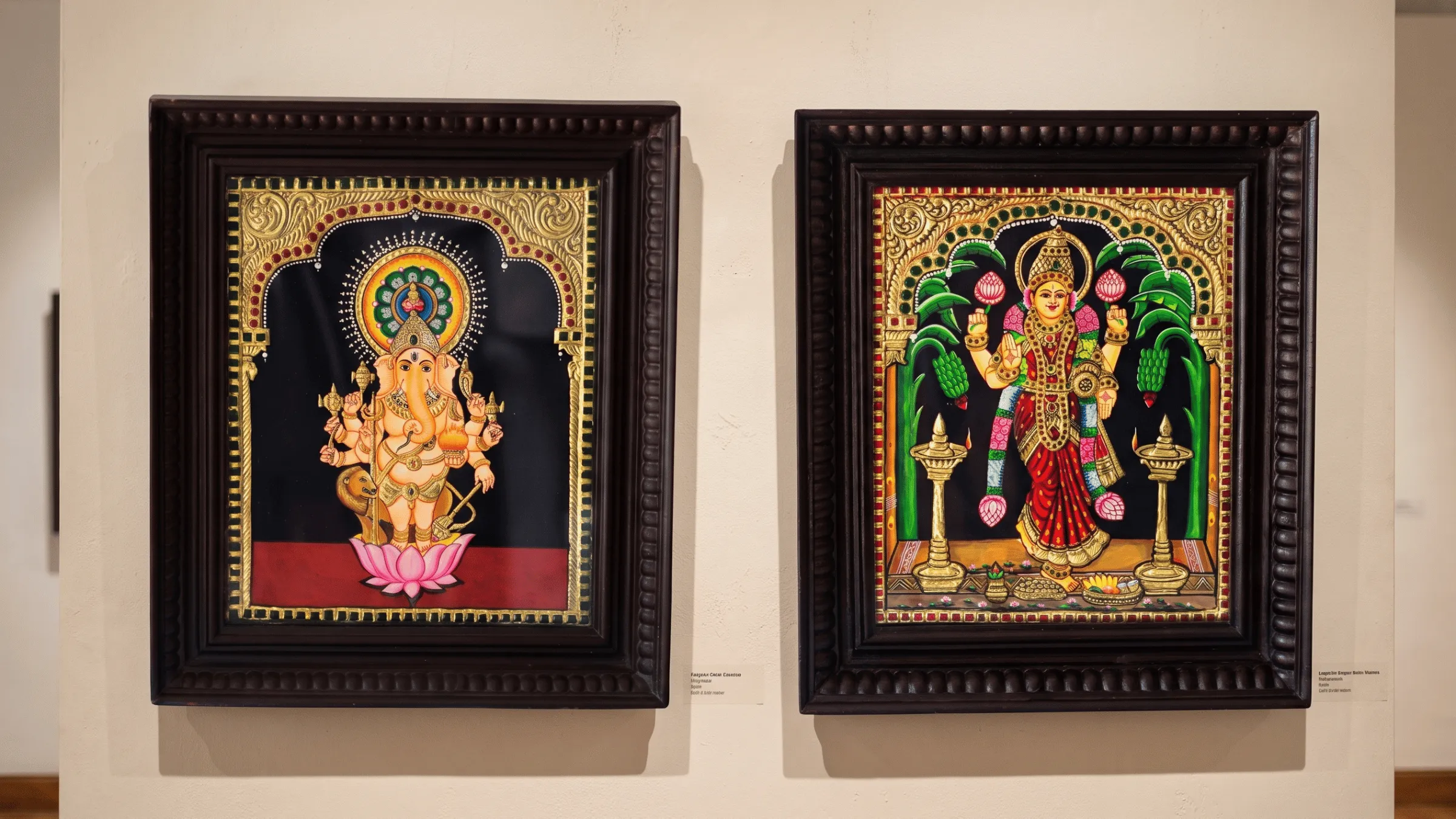
We’re setting out to show that, one wall at a time and we’re starting at the front door, with a new collection called Thalai Vasal.
What is thalai vasal?
Thalai is the head, the first of something. Vasal is the doorway. Together they make the main entrance, and in Indian homes it gets attention no other door does. Mango leaves are strung across the frame for festivals, turmeric and kumkum are dotted along the threshold, and children are told off for sitting on it.
It’s the first part of your home anyone sees, and the last thing you see when you leave.
In Sydney, most front doors get a doormat and maybe a wreath at Christmas. We wanted to bring that feeling of an Indian home here.
Tanjore paintings for the entrance, with meaning behind them
Of course we wanted the first collection to look beautiful at the door but traditional Indian art is almost never made only to decorate. Every piece carries a story and a reason for being where it is. That’s what gave us two paintings, each with its own symbolism.
Subha Drishti Ganapathy painting for your entrance
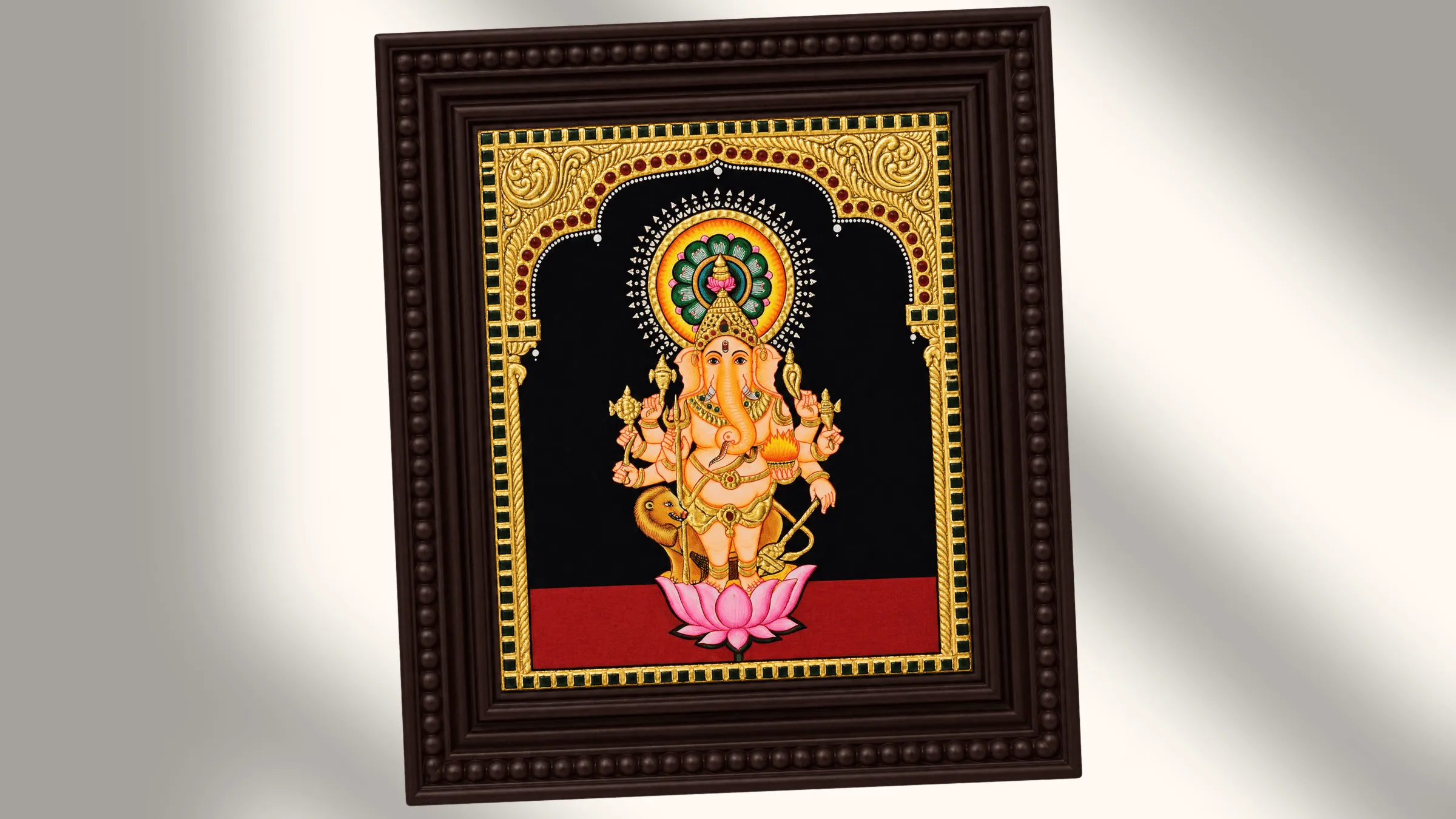
Ganesha is the one invoked before anything begins, whether it’s a wedding, a new business, or the first night in a new house. So it felt right that he’d be the first face at the door.
In the Subha Drishti form, he stands and keeps watch, and he carries the strength of both his parents. From Shiva he takes the third eye, the fire that sees through falsehood and clears what stands in the way. From Devi Parashakti he takes the lion, her courage made into something you can see. The trishul in his hand is a firm decision that some things are not coming in. He’s gentle Ganesha, ready to be fierce on your behalf.
His place is at the entrance, facing everyone who walks in.
Graha Lakshmi Tanjore painting above the main door
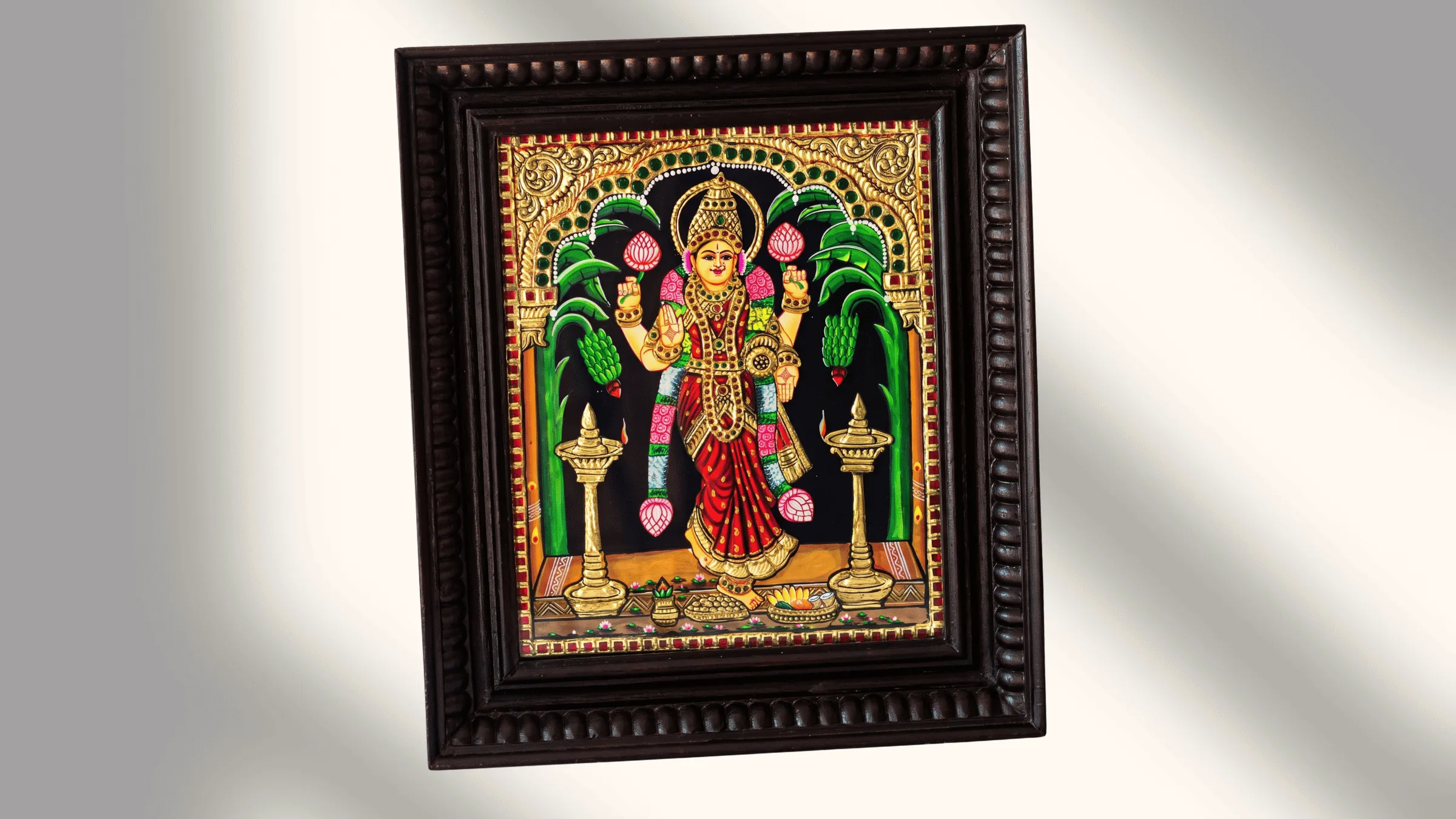
Lakshmi goes inside, on the wall directly above the main entrance.
In our painting she’s caught mid-step, entering a home, and she doesn’t arrive empty-handed. Wherever Graha Lakshmi steps in, wealth, peace and good fortune come in with her. Placing her above the main door invites all of that through the same threshold every day, so it settles into the house and stays.
Handpainted, framed in teak, made for your doorway
Both paintings are handpainted by master artisan Deepa Jai on a 12 x 10 inch Tanjore board. Each is set in a hand-assembled teakwood mani frame, bringing the finished piece to 15 x 13 inches.
One guards the door, and the other welcomes everything good through it.
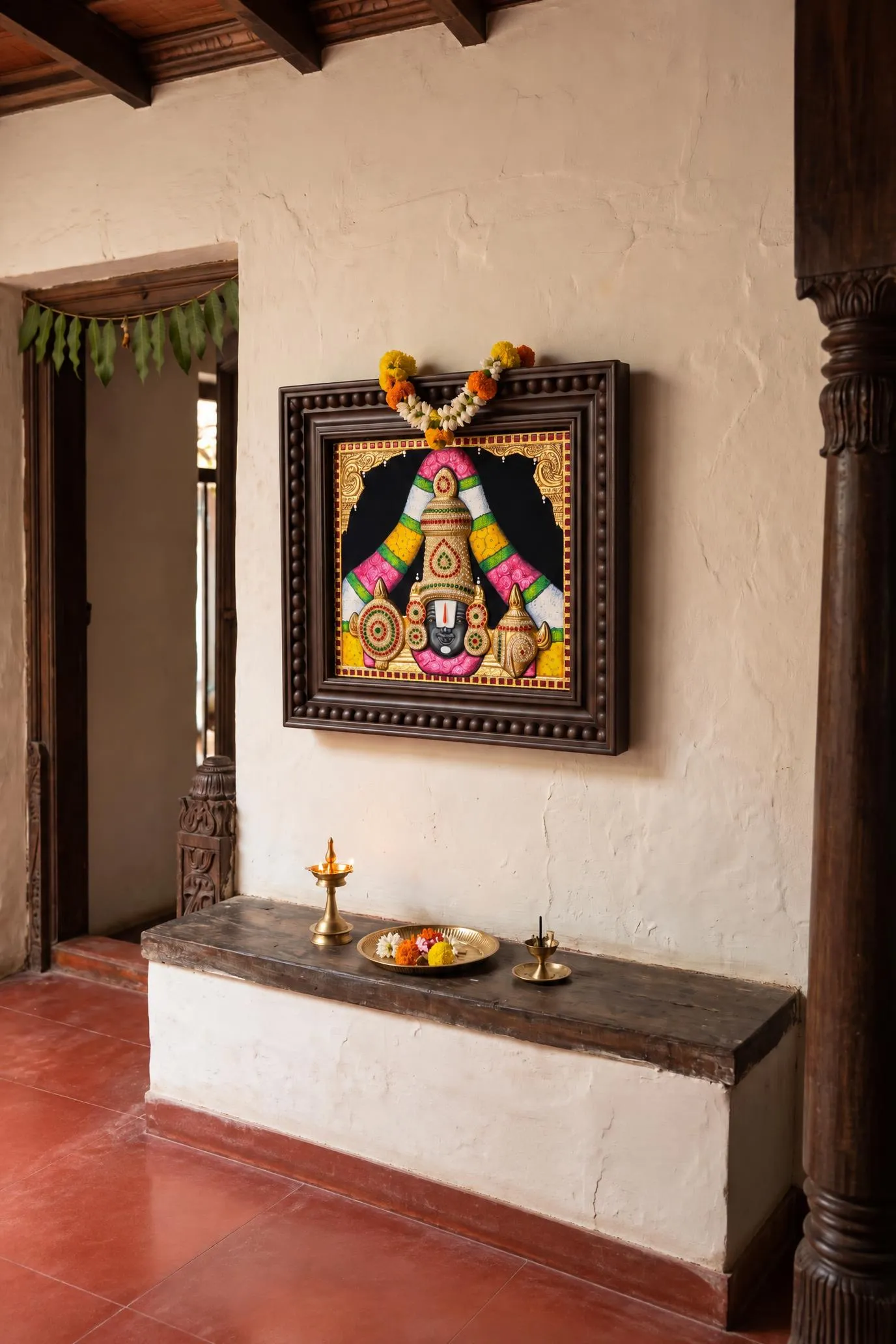
Lord Perumal Super Embossed Tanjore Painting
Tanjore Painting
A$550
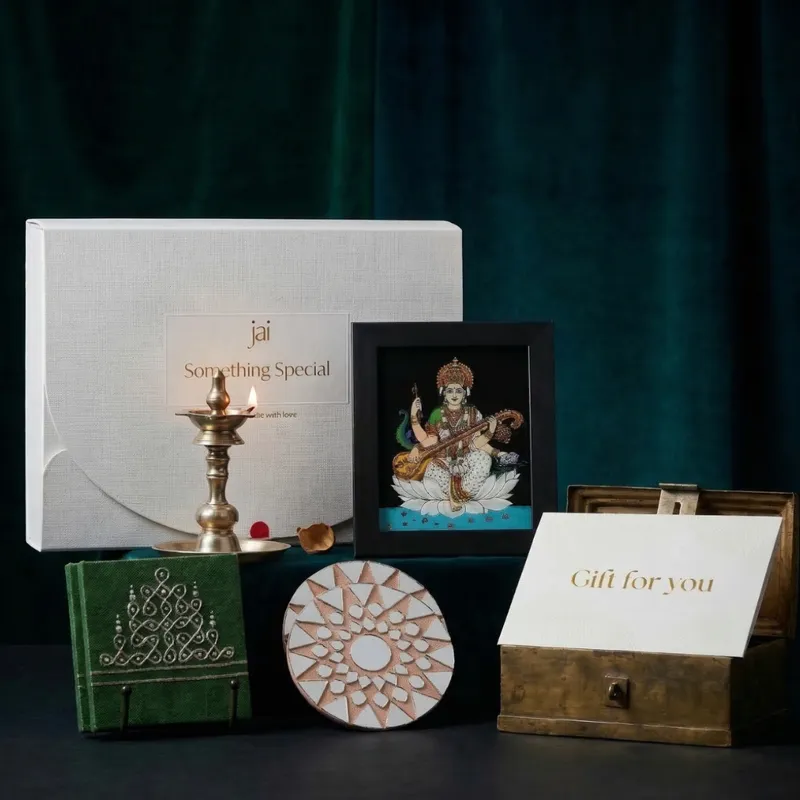
Artisan Hamper : Reverse Glass Painting Edition
Gift Hamper & Collection
A$80
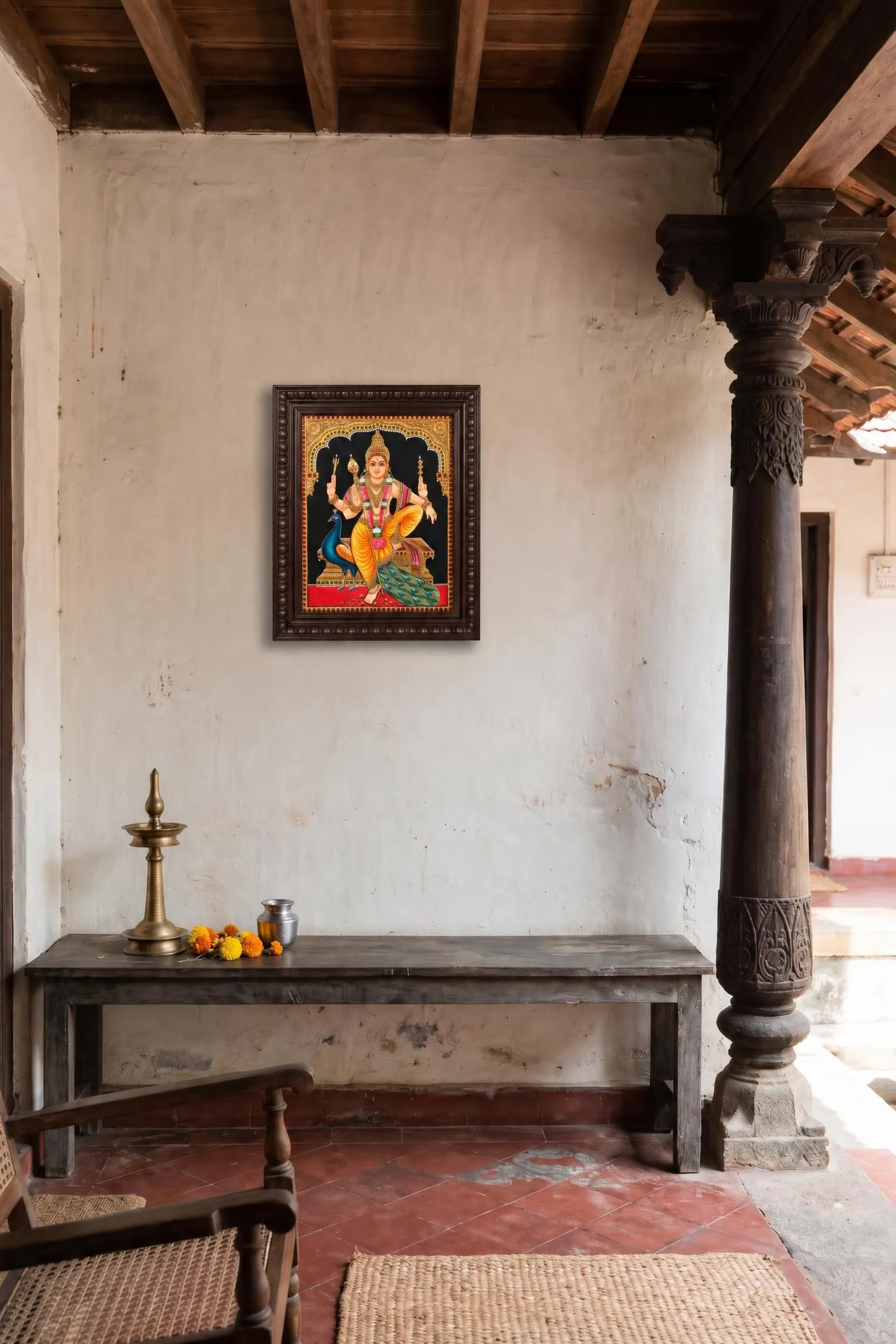
Lord Murugan with Peacock Tanjore Painting
Tanjore Painting
A$490
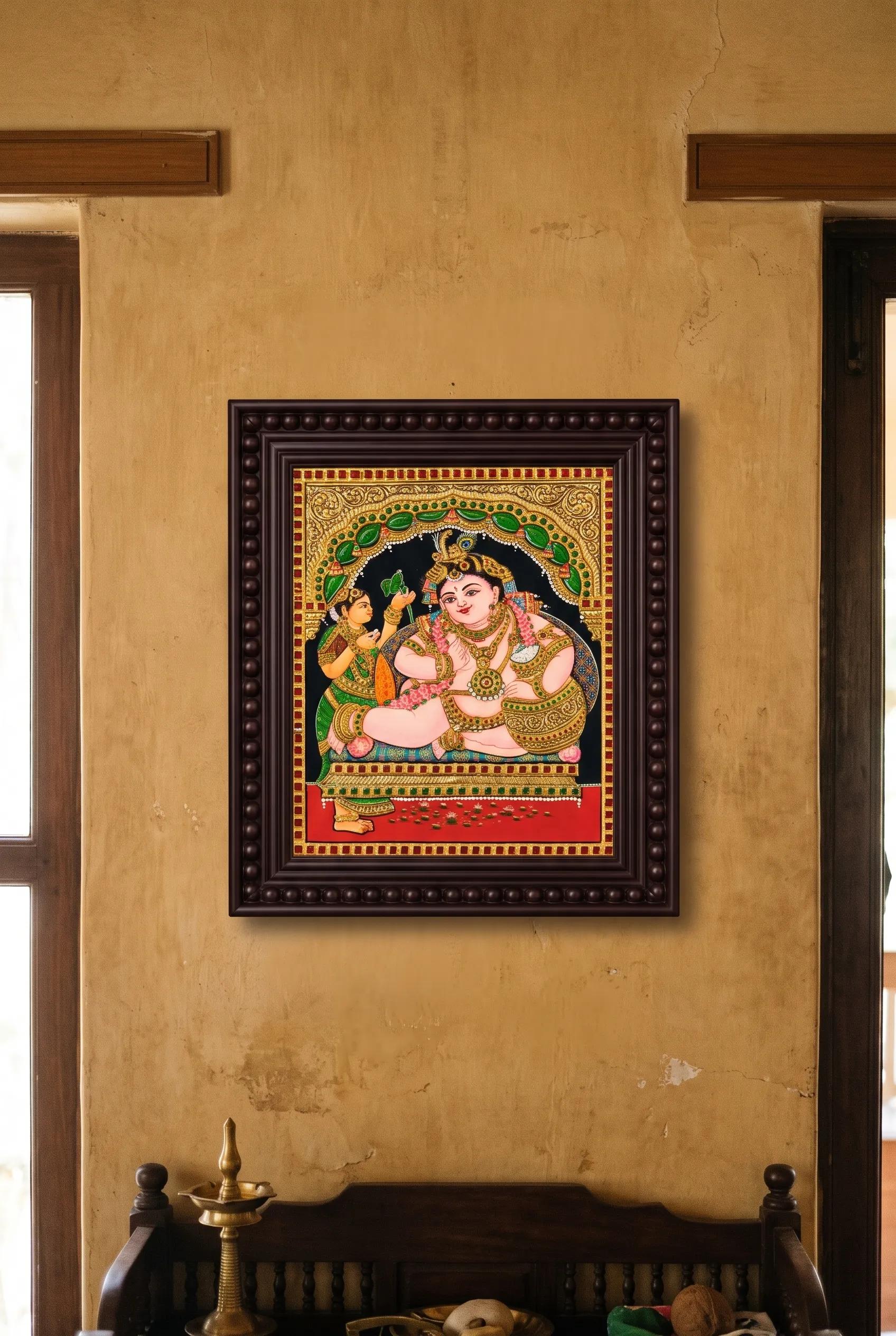
Butter Krishna or Bala Krishna Tanjore Painting
Tanjore Painting
A$390
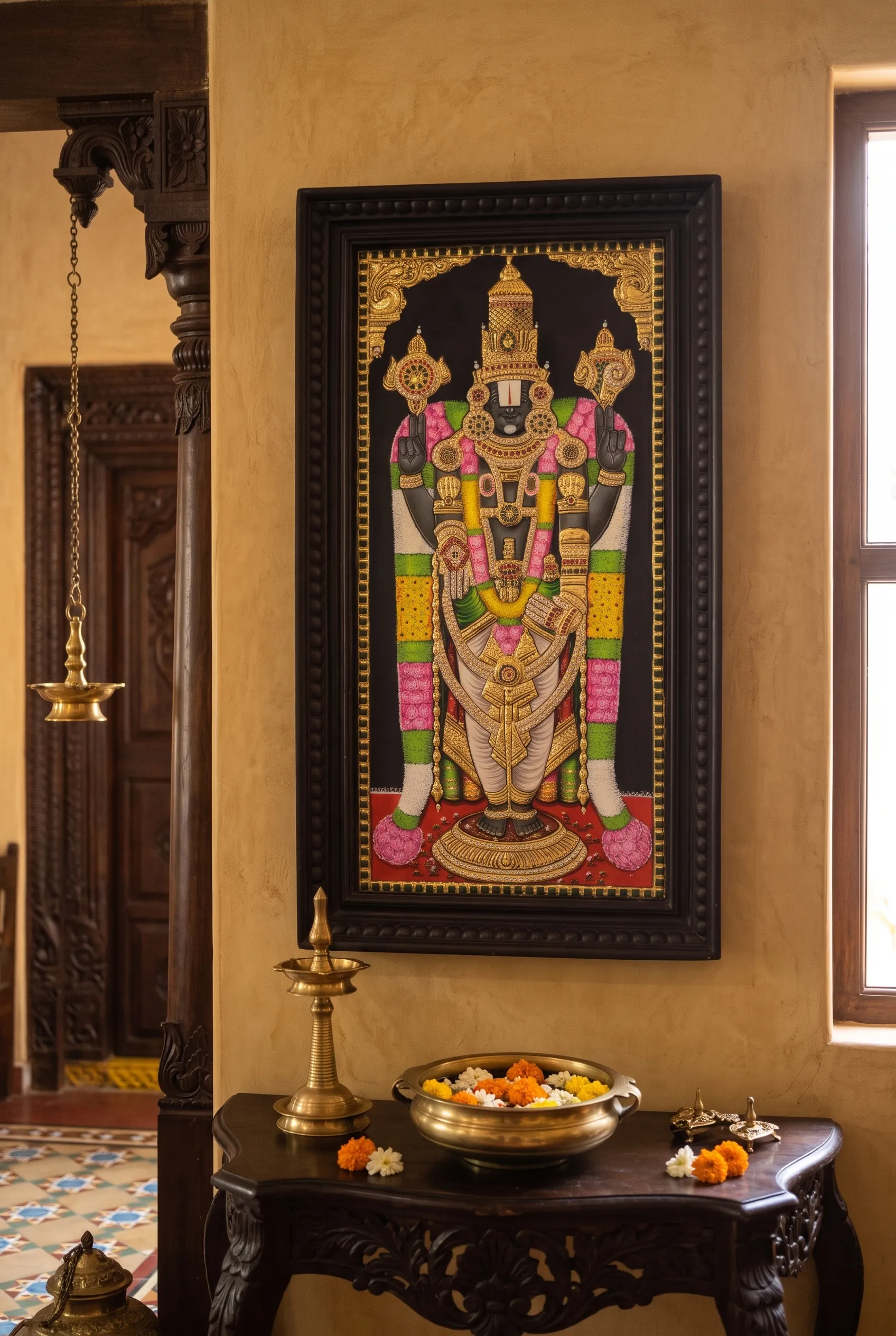
Lord Perumal Tanjore Painting
Tanjore Painting
A$790
Shop all
Every painting, handcrafted